The Things We Keep "Just in Case" (And What They're Really Costing You)

How many things are you holding onto "just in case"?
Just in case you need it someday.
Just in case you lose weight.
Just in case the kids want it.
Just in case they ask about it.
Just in case you finally get around to that project.
At first glance, this feels practical – even responsible. But if we're honest, most of what we keep "just in case" has been sitting untouched for years. And it's not only our closets and storage rooms that fill up this way. Our calendars, our commitments, our expectations, and even some of our relationships get cluttered by the exact same mindset.
It's Never Really About the Thing
The unused gift from your sister-in-law. The jar collection that's taken over a cabinet. The half-empty lotions and skincare samples you'll "use eventually." The clothes in last season's size, kept just in case. The album collection you swear could be worth money someday.
These all look like separate problems, but they're the same problem in different forms: something is occupying space in your life that isn't earning its keep.
Usually it's one of three things holding the door open.
With gifts, it's guilt – I can't get rid of that, what if they ask to see it? I've had this conversation with organizing clients more times than I can count, and I'll tell you what I tell them: the moment someone hands you a gift, they've also handed you ownership of it – including the decision about what happens next. The gift already did its job. It was the vehicle that someone in your life used to let you know they were thinking of you. You’re not obligated to keep it forever to prove that the care was received, and letting it go doesn't undo the relationship or the person's intent.
With things like the album collection, it's fear – what if I regret it, what if I'm wrong to let this go? This one rarely shows up as a clear thought. It's more of a quiet unease, the sense that getting rid of something might cost you later, even when you can't quite say how. Fear doesn't ask you to use the item or enjoy it. It just asks you to keep it safe, indefinitely, against a risk that may never materialize.
With jars, lotions, and clothes in the wrong size, it's possibility – I might need this someday. And maybe you will. But "might" is doing a lot of work here…while the item itself does none. It just sits there, waiting on a future that may or may not show up, quietly asking you to manage it in the meantime.
Different objects, different excuses, same trade: a small hit of comfort now, in exchange for a little of your space and attention, indefinitely.
The Real Cost Isn't Storage – It's Attention
Here's the part that matters more than any decluttering method: every item, commitment, or unfinished project quietly asks something of you.
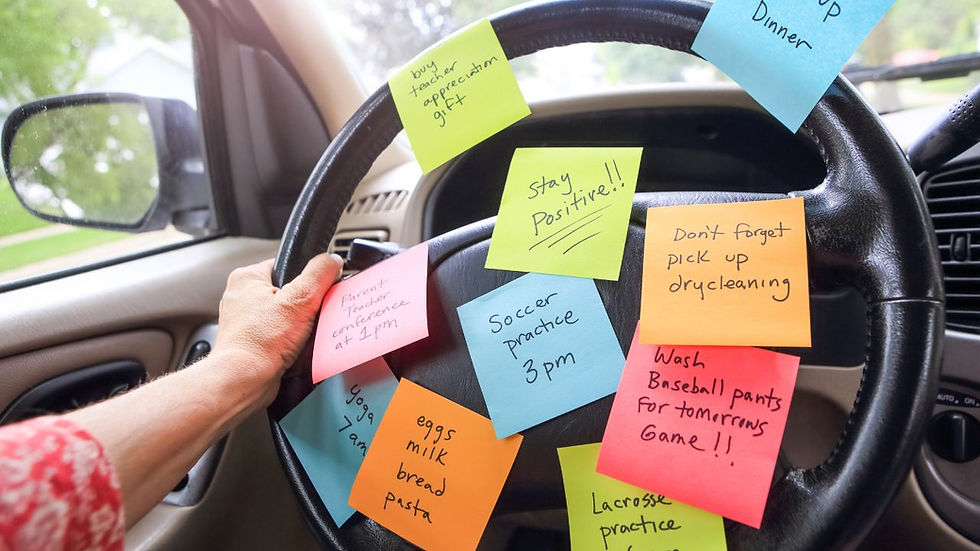
It takes up physical space, yes. But it also takes up mental space. It asks to be remembered, managed, cleaned, organized, stored, or felt guilty about. One thing doesn't seem like much. But hundreds of these small, unresolved decisions add up until your home feels crowded, your schedule feels overwhelming, and your mind never fully rests.
And that's the actual cost. Not the shelf space. The bandwidth.
Every unused item represents an unfinished decision – keep it, donate it, fix it, use it? Every time you see it, your brain processes it again, even for a fraction of a second. Multiply that by every drawer, every closet, every lingering "yes" you never meant to keep giving, and you start to understand why a cluttered life feels tiring even when nothing dramatic is happening in it.
That's mental energy you don't get back. And it's energy that isn't going toward the things you actually said you wanted – the dream you keep meaning to start, the goal you keep pushing to next year, the rest you keep telling yourself you'll get to eventually.
When Habit Replaces Choice
This same "just in case" mindset shows up far beyond your closet. Unfinished projects you haven't touched in months. Volunteer roles you no longer enjoy. Obligations you've outgrown. Relationships running on routine rather than genuine connection.
None of these started as burdens. At some point, each one was a yes – to a role, a hobby, a version of your schedule that made sense at the time. The problem is that a yes, once given, tends to run on autopilot until something forces you to look at it again. Nobody sends a reminder asking whether you still want to be on that committee. It just continues, quietly, until it's simply part of your life whether it still fits or not.
Routines and habits make life more efficient in some cases – that's exactly why they're so easy to stop questioning. But that same efficiency can keep you doing things long after they've stopped serving you, simply because reconsidering them was never on the agenda.
It's worth asking, every so often: Do I still want this? Does it still fit the life I'm building? Or am I only keeping it because I've always kept it? That question applies just as much to a calendar full of obligations as it does to a jar collection.
The Future Self You're Managing For
So much of what we hold onto is really an offering to a future version of ourselves — the one who's finally going to quilt, use the bread machine, tackle the DIY project, or somehow find five extra hours every Tuesday.
That future self is easy to shop for and easy to keep making room for, because she doesn't have to live with any of the consequences. She doesn't feel the drawer that won't close or the mental tax of walking past the same unfinished project for the hundredth time. You do.
There's nothing wrong with dreaming, and goals and hope genuinely matter. But there's a real difference between keeping something for a goal you're actively working toward and keeping something instead of deciding whether that goal still matters to you. The first is intention. The second is just deferral wearing intention's clothes.
There's wisdom in noticing when something represents who you used to be, or who you thought you'd become, rather than who you actually are today. Every "just in case" you keep for that future self is space, time, or energy your current life and your current goals don't get to use instead. And those are the ones that actually deserve your attention right now.
Make Room for What Actually Matters
Making a decision, even a small one, almost always feels lighter than continuing to postpone it.
Imagine reclaiming that shelf.
Imagine a calendar with an actual open evening on it.
Imagine letting go of an expectation simply because it no longer fits.
This isn't about becoming a minimalist. It's about freeing up the time and mental space you need for what's actually in front of you now – including the goals and dreams that "just in case" clutter has been quietly crowding out.
This week, pick one thing. One drawer. One shelf. One commitment. Ask yourself honestly: Is this adding value to my life today, or am I just keeping it "just in case"?
Your answer might tell you more than you expect – and it might be the first bit of space you make for something that actually matters.
If you're ready to clear the clutter from your life, save your seat at the next Mindful Decluttering workshop right here.
Enjoy the journey,
Julie


Comments